RETURN TO TOP INTRO PAGE of the Japanese Buddhist Statuary A to Z Photo Library & Dictionary of Gods, Goddesses, Shinto Kami, Creatures, and Demons pixel View Our Copyright and Fair/Unfair Usage Policies
top line

spacer


Advanced Search

QUICK GUIDES
Intro, What's New
Guidebook
Who's Who
Buddha
Bodhisattva
Myo-o
Tenbu / Deva
Making Statues
Timeline & History
Cycle of Suffering
Hands (Mudra)
Shinto/Shintoism
Terminology
Bibliography
About Site Author
Contact Author


Buddhist-Artwork.com, our sister site, offers online sales of hand-carved wood Buddha statues.

A to Z
3 Element Stele
3 Monkeys
4 Bosatsu
4 Celestial Emblems
4 Heavenly Kings
5 (Number Five)
5 Elements
5 Tathagata
5 Tier Pagoda
5 Wisdom Kings
6 Jizo
6 Kannon
6 Realms
6 Nara Schools
7 Lucky Gods
7 Nara Temples
8 Legions
8 Zodiac Patrons
10 Kings of Hell
12 Devas
12 Generals
12 Zodiac Animals
28 Legions
28 Constellations
About the Author
Agyo
Aizen
Amano Jyaku
Amida Nyorai
Apsaras
Arakan (Rakan)
Arhat (Rakan)
Ashuku Nyorai
Asuka Era Art Tour
Asura (Ashura)
Bamboo
Benzaiten (Benten)
Bibliography
Big Buddha
Birushana Nyorai
Bishamon-ten
Bodhisattva
Bosatsu Group
Bosatsu of Mercy
Bosatsu on Clouds
Buddha (Historical)
Buddha Group
Buddha Statues
Busshi (Sculptors)
Calligraphy
Celestial Emblems
Celestial Maidens
Children Patrons
Classifying
Color Red
Confucius
Daibutsu
Daijizaiten
Daikoku-ten
Dainichi Nyorai
Daruma (Zen)
Datsueba (Hell Hag)
Deva (Tenbu)
Donations
Dosojin
Dragon
Drapery (Robes)
Early Buddhism Japan
Ebisu
Eight Legions
Estores
Family Tree
Footprints of Buddha
Fox (Oinari)
Fudo (Fudou) Myoo
Fugen Bosatsu
Fukurokuju
Gakko & Nikko
Gardens
Gigeiten
Gravestones
Godai Nyorai
Goddess of Mercy
Goddesses
Hachi Bushu
Hachiman
Hands (Mudra)
Hell (10 Judges)
Hell Hag (Datsueba)
Hell Scrolls
Henge
Holy Mountains
Ho-o (Phoenix)
Hotei
Idaten
Ishanaten
Ishidoro (Ishidourou)
Jikokuten
Jizo Bosatsu
Juni Shi
Juni Shinsho
Juni Ten
Junrei (Pilgrimage)
Jurojin
Juuzenji
Jyaki or Tentoki
Kankiten
Kannon Bosatsu
Kappa
Kariteimo (Kishibojin)
Karura
Karyoubinga
Kendatsuba
Kichijouten
Kitchen Gods
Kishibojin (Kariteimo)
Kitsune (Oinari)
Kokuzo Bosatsu
Koujin (Kojin)
Komokuten
Koushin
Lanterns (Stone)
Links
Making Statues
Mandara (Mandala)
Maneki Neko
Marishiten
Miroku Bosatsu/Nyorai
Monju Bosatsu
Monkeys
Moon Lodges
Mother Goddess
Mudra (Hands)
Myoken (Pole Star)
Myo-o
Nara Era Art Tour
Nijuhachi Bushu
Nikko & Gakko
Ninpinin
Nio Protectors
Nyorai Group
Oinari (Fox)
Phoenix (Ho-o)
Pilgrimage Guide
Pottery
Protective Stones
Raigo Triad
Rakan (Arhat)
Red Clothing
Reincarnation
Robes (Drapery)
Rock Gardens
Sanbo Kojin
Sanno Gongen
Sarutahiko
Sculptors (Busshi)
Seishi Bosatsu
Sendan Kendatsuba
Seven Lucky Gods
Shaka Nyorai
Shape Shifters
Shichifukujin
Shijin (Shishin)
Shinra Myoujin
Shinto Concepts
Shinto Main Menu
Shinto Shrines
Shishi (Lion)
Shitenno
Shoki
Shomen Kongo
Shotoku Taishi
Shrines
Siddhartha
Six States
Star Deities
Stone Gardens
Stone Graves
Stone Lanterns
Stones (Top Menu)
Suijin (Water Kami)
Tamonten
Taishakuten
Tanuki
Temples
Temple Lodging
Tenbu Group
Tengu
Tennin & Tennyo
Tentoki or Jyaki
Terminology
Tibetan Carpets
Tibet Photos
Tibetan Tanka
Transmigration
Ungyo
Water Basin
Wheel of Life
Yakushi Nyorai
Yasha (Yaksha)
Zao Gongen
Zen (Daruma)
Zen Art Tour
Zodiac Calendar
Zochoten

spacer


OTHER STONE MARKERS & MEMORIALS

Last Update: Feb. 22, 2006
Added Omokaru Jizo & Omokaru Ishi

THIS IS A SIDE PAGE
 RETURN TO "STONES TOP MENU"


O-HYAKUDO MAIRI
100 Pilgrimages at One Shrine

お百度参り (おひゃくどまいり)

Also called hyakudomairi (hundred pilgrimages) and sengori (thousand purifications). Individual or group practice of traveling back and forth one hundred times between a shrine and some fixed place in that shrine's precincts, praying each time. Often performed to gain divine aid in cases of sickness and disaster. <source: Online Shinto dictionary of the Institute for Japanese Culture and Classics, Kokugakuin University at www2.kokugakuin.ac.jp/ijcc/wp/bts/bts_o.html#o-hyakudo>

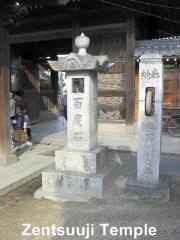
Hyakudo Mairi at Zentsuuji Temple, Kagawa, Japan
At Zentsuu-Ji (Kagawa, Japan)
kagawa.bine.jp/pblog/article.php?id=125
You turn the wheel and make a prayer on
each of the 100 circuits in your pilgrimage.

Photo Tour of Hyakudo Mairi Stones
http://kagawa.bine.jp/jinnjya/topix/100do/100do.html
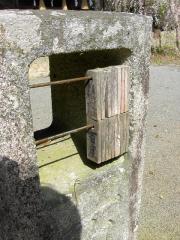
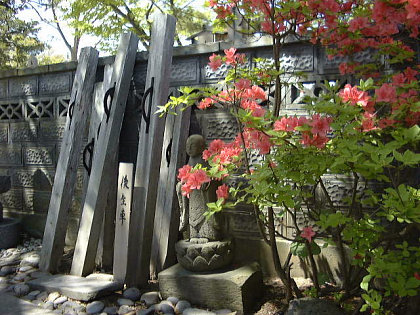
Woods slabs for the Hyakudo Mairi Pilgrimage
See the wooden slabs in above photo.
You push aside one each time you reach the stone,
until they are all on the other side, completing your 100 walks.
 Courtesy of http://kagawa.bine.jp/jinnjya/topix/100do/100do.html

There are variants. In some shrines, when you turn the wheel, you have to make sure nobody sees you, otherwise your wish will not come true. Therefore this pilgrimage is usually practiced in the dark of the night.
<source tctv.ne.jp/tobifudo/HandS/tango/hyakudo/hyakudo.html>

Top of Page


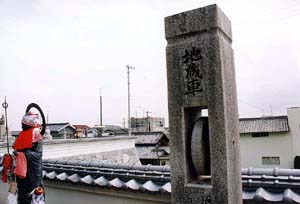
There is a Japanese Buddhist variant of the Hyakudo Mairi Shinto tradition that involves the beloved Jizo Bosatsu. It is called the 地蔵車. This translates as the Jizo Wheel (which includes the afterlife wheel, 後生車, ごしょうぐるま) and the Bosatsu wheel (菩提車, ぼだいぐるま). Found in front of many temples. When you say your wish while turning the wheel downward, a wish for the afterlife will be granted. When you turn the wheel upward, a wish for your present life will be granted. For details, please see: www.fmkagawa.co.jp/yomu/88/88-56.htm.

Jizo Wheel
Photo courtesy www.fmkagawa.co.jp/yomu/88/88-56.htm

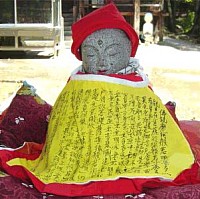
Jizo Wheel
Jizo Wheel at Dazaifu
 Courtesy of www.jomon.ne.jp/~oldpine/photo4.html

For more, please see Japanese language site at:
 http://homepage3.nifty.com/yukijuku/karafune/k35.htm


Haiku Monument Stones
Literature Stones, Memorial Stones
Under construction.
Please visit below site for many examples.

 www.lib.ehime-u.ac.jp/KUHI/ENG/kuhisakuineng.html

Top of Page


Omokaru Jizo at Gokurakuji Temple; photo courtesy of www.tv-naruto.ne.jp/gokurakuji/omokarujizo.html
Omokaru Jizo
At Gokurakuji Temple
2nd Site of Shikoku Pilgrimage

Also called:
Jizo to hold in your arms
Photo courtesy
this J-Site

Omokaru Ishi

おもかる石

Omokaru Jizo
 おもかる地蔵尊

Below text courtesy Gabi Greve.
Omokaru-ishi literally means "heavy or light stones." There are numerous variations for these types of stones and statues.

Essentially, you make a wish and try to lift the stone (or statue). If you can carry it (karui = light), your wish will be granted. If you cannot carry it (omoi = heavy), then you have to come back another day and try again. Sometimes a statue of Jizo Bosatsu is used instead of a stone. For more details and a list of sites where these stones are located, please see this web page by Gabi Greve.


Top of Page

THIS IS A SIDE PAGE
 RETURN TO "STONES TOP MENU"


spacer

bottom bar

Copyright Mark Schumacher. Email Mark.
All stories and photos, unless specified otherwise, by Schumacher.
www.onmarkproductions.com