|
|
|
|
Overview of Zen Buddhism
and Its Influence on Japanese Art
Photos and Story by Mark Schumacher
For details on Zen’s early history, please visit the Daruma Page
For Sculpture & Art Before Zen, Please See:
Asuka Era Art Tour (50+ Photos)
Nara Era Art Tour (39 Photos)
|

|
How does Buddhism influence modern Japanese art?
|
|
Perhaps the greatest watershed in Japanese aesthetics occurs with the introduction of Zen Buddhism (Chinese in origin) early in the Kamakura Era (1185-1333). The contribution of Zen to Japanese culture is profound, and much of what the West admires in Japanese art today can be traced to Zen influences on Japanese architecture, poetry, ceramics, painting, calligraphy, gardening, the tea ceremony, flower arrangement, and other crafts. Zen monasteries, for example, typically have a giant dragon painted on the ceiling of their assembly halls.
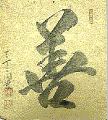 In calligraphy, the brush line becomes sweeping and fluid -- spontaneous rather than predictable, irregular rather than regular. In landscape painting, emptiness becomes a crucial ingredient, and space itself is brought to life with a few strokes of the brush. Japanese poetry (haiku) turns to silence and simplicity to evoke mood and sensation. In flower arrangement, unspeakable loveliness is achieved with a solitary spray of blossoms rather than a bunching together of colors as with Western bouquets. In landscape gardening, the gardener cultivates as if not cultivating, as if the gardener were part of the garden, and gardens soon appear helped rather than governed by the gardener. With Zen, art aspires to represent not only nature itself but to become a work of nature. To paraphrase Alan Watts, Zen art is the “art of artlessness, the art of controlled accident.” In calligraphy, the brush line becomes sweeping and fluid -- spontaneous rather than predictable, irregular rather than regular. In landscape painting, emptiness becomes a crucial ingredient, and space itself is brought to life with a few strokes of the brush. Japanese poetry (haiku) turns to silence and simplicity to evoke mood and sensation. In flower arrangement, unspeakable loveliness is achieved with a solitary spray of blossoms rather than a bunching together of colors as with Western bouquets. In landscape gardening, the gardener cultivates as if not cultivating, as if the gardener were part of the garden, and gardens soon appear helped rather than governed by the gardener. With Zen, art aspires to represent not only nature itself but to become a work of nature. To paraphrase Alan Watts, Zen art is the “art of artlessness, the art of controlled accident.”
Simplicity, emptiness, directness, and naturalness are the hallmarks of Japanese Zen Buddhist art. This Zen aesthetic permeates modern Japan artistic sensibilities. Japanese art, one might say, is an intriguing combination of Buddhist religious elements colored by strong Zen sensibilities and a Shinto emphasis on naturalness. Despite great new artistic influences since Japan’s “opening” to the West in the last three centuries, Japan still retains a distinctive artistic style that speaks from “within” and glows with a creativity not commonly found in the West or in the rest of Asia. This, in my mind, is mostly the influence of Zen on Japanese sensibilities.

|
|
When was Buddhism introduced to Japan?
|
|
Buddhism (originally from India) was introduced to Japan from China and Korea in the 6th century A.D. It immediately sparked the interest of Japan’s ruling elite and within a century became the state creed. Buddhism brought new theories on government, a means to establish strong centralized authority, a system for writing, advanced new methods for building and for casting in bronze, and new techniques and materials for painting. Japanese art until the 9th century is primarily “religious“ art, confined to temple construction, to Buddhist sculpture and painting, to illustrated handscrolls to transmit Buddhist teachings, and to mandalas of the Buddhist cosmos and its deities.
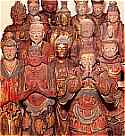 Japan’s break with China in the 9th century provides an opportunity for a truly native Japanese culture to flower, and from this point forward indigenous secular art becomes increasingly important. Religious and secular art flourish in step until the 16th century, but then the importance of institutionalized Buddhism plummets owing to the Confucian ethic of the Edo-period shogunate, contact with the Western world, and political turmoil. Secular art becomes the primary vehicle for expressing Japanese aesthetics, but it is tempered greatly by the “spontaneity” of Zen Buddhism and the “affinity to nature” of Shinto. Japan’s break with China in the 9th century provides an opportunity for a truly native Japanese culture to flower, and from this point forward indigenous secular art becomes increasingly important. Religious and secular art flourish in step until the 16th century, but then the importance of institutionalized Buddhism plummets owing to the Confucian ethic of the Edo-period shogunate, contact with the Western world, and political turmoil. Secular art becomes the primary vehicle for expressing Japanese aesthetics, but it is tempered greatly by the “spontaneity” of Zen Buddhism and the “affinity to nature” of Shinto.

|
|
Why did Japan absorb then assimilate Buddhism?
|
Buddhism was adopted by Japan’s rulers primarily to establish social order and political control, and to join the larger and more sophisticated cultural sphere of the mainland. Buddhism’s introduction to Japan in 552 AD was accompanied by the arrival thereafter of countless artisans, priests, and scholars from Korea and China, and numerous Japanese missions to the mainland. Japan first learned of Buddhism from Korea, but the subsequent development of Japanese Buddhism and Buddhist sculpture was primarily influenced by China. According to tradition, Buddhism was introduced to Japan in 552 AD (other sources say 538 AD) when the king of Korean sent the Japanese Yamato 大和 court a small gilt bronze Buddha statue, some Buddhist scriptures, and a message praising Buddhism. Scholars continue to disagree on the exact date of the statue’s arrival. The Nihonshoki 日本書紀, one of Japan’s oldest extant documents, says the statue was presented sometime during the reign of Emperor Kinmei 欽明 (539 to 571 AD). For details, see Early Japanese Buddhism.
Buddhism Reaches Commoners
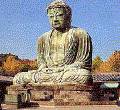 Buddhism remains largely confined to the court, scholars and monasteries until the Kamakura Era (1185-1333), when it is popularized by new Buddhist sects committed to bringing Buddhism to the illiterate commoner. These sects (Pure Land, Zen, and Nichiren) express concern for the salvation of the ordinary person, and stress pure and simple faith over complicated rites and doctrines. Buddhist temples begin responding to the needs of commoners, and Buddhist art becomes increasingly popularized, for it must satisfy not only the commoner but also the new Warrior Class (samurai) who have wrested power from nobility. Buddhist sculptures and paintings portray divinities with greater humanistic nuances and personalities, and a new spirit of realism emerges. Buddhism remains largely confined to the court, scholars and monasteries until the Kamakura Era (1185-1333), when it is popularized by new Buddhist sects committed to bringing Buddhism to the illiterate commoner. These sects (Pure Land, Zen, and Nichiren) express concern for the salvation of the ordinary person, and stress pure and simple faith over complicated rites and doctrines. Buddhist temples begin responding to the needs of commoners, and Buddhist art becomes increasingly popularized, for it must satisfy not only the commoner but also the new Warrior Class (samurai) who have wrested power from nobility. Buddhist sculptures and paintings portray divinities with greater humanistic nuances and personalities, and a new spirit of realism emerges.
The deities Amida, Kannon, and Jizo become popular saviors (Amida for the coming life in paradise, Kannon for salvation in earthly life, and Jizo for salvation from hell).
LEARN MORE
|
|






