RETURN TO TOP INTRO PAGE of the Japanese Buddhist Statuary A to Z Photo Library & Dictionary of Gods, Goddesses, Shinto Kami, Creatures, and Demons pixel View Our Copyright and Fair/Unfair Usage Policies
top line

spacer


Advanced Search

QUICK GUIDES
Home: What's New
Guidebook
Who's Who
Buddha
Bodhisattva
Myo-o
Tenbu / Deva
Making Statues
Busshi (Sculptors)
Timeline & History
Cycle of Suffering
Hands (Mudra)
Shinto/Shintoism
Terminology
Bibliography
About Site Author
Contact Author


Buddhist-Artwork.com, our sister site, offers online sales of hand-carved wood Buddha statues.

A to Z
3 Element Stele
3 Monkeys
4 Bosatsu
4 Celestial Emblems
4 Heavenly Kings
5 (Number Five)
5 Elements
5 Tathagata
5 Tier Pagoda
5 Wisdom Kings
6 Jizo
6 Kannon
6 Realms
6 Nara Schools
7 Lucky Gods
7 Nara Temples
8 Legions
8 Zodiac Patrons
10 Kings of Hell
12 Devas
12 Generals
12 Zodiac Animals
28 Legions
28 Constellations
About the Author
Agyo
Aizen
Amano Jyaku
Amida Nyorai
Apsaras
Arakan (Rakan)
Arhat (Rakan)
Ashuku Nyorai
Asuka Era Art Tour
Asura (Ashura)
Bamboo
Benzaiten (Benten)
Bibliography
Big Buddha
Birushana Nyorai
Bishamon-ten
Bodhisattva
Bosatsu Group
Bosatsu of Mercy
Bosatsu on Clouds
Buddha (Historical)
Buddha Group
Buddha Statues
Busshi (Sculptors)
Calligraphy
Celestial Emblems
Celestial Maidens
Children Patrons
Classifying
Color Red
Confucius
Daibutsu
Daijizaiten
Daikoku-ten
Dainichi Nyorai
Daruma (Zen)
Datsueba (Hell Hag)
Deva (Tenbu)
Donations
Dosojin
Dragon
Drapery (Robes)
Early Buddhism Japan
Ebisu
Eight Legions
Estores
Family Tree
Footprints of Buddha
Fox (Oinari)
Fudo (Fudou) Myoo
Fugen Bosatsu
Fukurokuju
Gakko & Nikko
Gardens
Gigeiten
Godai Nyorai
Goddess of Mercy
Goddesses
Gongen
Gravestones
Hachi Bushu
Hachiman
Hands (Mudra)
Hell (10 Judges)
Hell Hag (Datsueba)
Hell Scrolls
Henge
Holy Mountains
Ho-o (Phoenix)
Hotei
Idaten
Ishanaten
Ishidoro (Ishidourou)
Jikokuten
Jizo Bosatsu
Jocho Busshi
Juni Shi
Juni Shinsho
Juni Ten
Junrei (Pilgrimage)
Jurojin
Juuzenji
Jyaki or Tentoki
Kaikei Busshi
Kankiten
Kannon Bosatsu
Kappa
Kariteimo (Kishibojin)
Karura
Karyoubinga
Kendatsuba
Kichijouten
Kitchen Gods
Kishibojin (Kariteimo)
Kitsune (Oinari)
Kokuzo Bosatsu
Koujin (Kojin)
Komokuten
Koushin
Lanterns (Stone)
Links
Making Statues
Mandara (Mandala)
Maneki Neko
Marishiten
Miroku Bosatsu/Nyorai
Monju Bosatsu
Monkeys
Moon Lodges
Mother Goddess
Mudra (Hands)
Myoken (Pole Star)
Myo-o
Nara Era Art Tour
Nijuhachi Bushu
Nikko & Gakko
Ninpinin
Nio Protectors
Nyorai Group
Oinari (Fox)
Phoenix (Ho-o)
Pilgrimage Guide
Pottery
Protective Stones
Raigo Triad
Rakan (Arhat)
Red Clothing
Reincarnation
Robes (Drapery)
Rock Gardens
Sanbo Kojin
Sanno Gongen
Sarutahiko
Sculptors (Busshi)
Seishi Bosatsu
Sendan Kendatsuba
Seven Lucky Gods
Shaka Nyorai
Shape Shifters
Shichifukujin
Shijin (Shishin)
Shinra Myoujin
Shinto Concepts
Shinto Main Menu
Shinto Shrines
Shishi (Lion)
Shitenno
Shoki
Shomen Kongo
Shotoku Taishi
Shrines
Siddhartha
Six States
Star Deities
Stone Gardens
Stone Graves
Stone Lanterns
Stones (Top Menu)
Suijin (Water Kami)
Tamonten
Taishakuten
Tanuki
Temples
Temple Lodging
Tenbu Group
Tengu
Tennin & Tennyo
Tentoki or Jyaki
Terminology
Tibetan Carpets
Tibet Photos
Tibetan Tanka
Transmigration
Ungyo
Unkei Busshi
Water Basin
Wheel of Life
Yakushi Nyorai
Yasha (Yaksha)
Zao Gongen
Zen (Daruma)
Zen Art Tour
Zodiac Calendar
Zochoten

spacer

 Japanese Ceramics

Of all Japanese arts, one of the oldest, most indigenous, and most widely recognized worldwide is ceramics. It is difficult to proclaim any particular religious influence on ceramic styles, but the Zen taste for directness, simplicity, earthiness, and irregular shapes is nonetheless prominent in the work of many modern Japanese potters. Nonetheless, Japanese pottery did not develop in a vacuum. Perhaps the greatest influence on Japanese pottery during Japan's feudal periods came from Korea. The Korean influence on Japanese pottery is profound. For example, Japan's famous Hagi ware originated when Korean potters were brought back to Japan during the "pottery wars" of 1592 AD and 1597 -1598 AD.
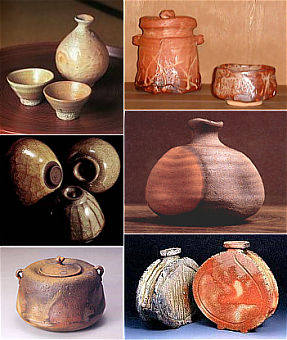
Pottery Montage

I have been very lucky to become friends with Robert Yellin, a long-time Japan resident (born in USA) who is among a very small group of foreigners with a deep understanding of Japanese pottery. Robert's pottery knowledge center is located at www.e-yakimono.net, and his e-store gallery at www.japanesepottery.com. The first site listed above includes a world-class pottery guidebook/primer. Click the below link to enter the Guidebook, which provides descriptions for over 40 styles, with nearly 200 photos. As a side note, I am webmaster for Robert's pottery sites.


More than 40 Styles Explained, Nearly 200 Photos
Please visit www.e-yakimono.net/guide


spacer

bottom bar

Copyright Mark Schumacher. Email Mark.
All stories and photos, unless specified otherwise, by Schumacher.
www.onmarkproductions.com


