Japanese Buddhism, Photo Dictionary of Japan's Shinto and Buddhist DivinitiesRETURN TO TOP PAGE of Japanese Buddhist Statuary A to Z Photo Library & Dictionary of Gods, Goddesses, Shinto Kami, Creatures, and DemonsCopyright and Usage PoliciesJump to Sister Store Selling Handcrafted Buddha Statues from China, Japan, and Asia
top line

spacer


Advanced Search

QUICK GUIDES
Intro, What's New
Guidebook
Who's Who
Buddha
Bodhisattva
Myo-o
Tenbu / Deva
Making Statues
Timeline & History
Cycle of Suffering
Hands (Mudra)
Shinto/Shintoism
Terminology
Bibliography
About Site Author
Contact Author


Buddhist-Artwork.com, our sister site, offers online sales of hand-carved wood Buddha statues.

A to Z
3 Element Stele
3 Monkeys
4 Bosatsu
4 Celestial Emblems
4 Heavenly Kings
5 (Number Five)
5 Elements
5 Tathagata
5 Tier Pagoda
5 Wisdom Kings
6 Jizo
6 Kannon
6 Realms
6 Nara Schools
7 Lucky Gods
7 Nara Temples
8 Legions
8 Zodiac Patrons
10 Kings of Hell
12 Devas
12 Generals
12 Zodiac Animals
28 Legions
28 Constellations
About the Author
Agyo
Aizen
Amano Jyaku
Amida Nyorai
Apsaras
Arakan (Rakan)
Arhat (Rakan)
Ashuku Nyorai
Asuka Era Art Tour
Asura (Ashura)
Bamboo
Benzaiten (Benten)
Bibliography
Big Buddha
Birushana Nyorai
Bishamon-ten
Bodhisattva
Bosatsu Group
Bosatsu of Mercy
Bosatsu on Clouds
Buddha (Historical)
Buddha Group
Buddha Statues
Busshi (Sculptors)
Calligraphy
Celestial Emblems
Celestial Maidens
Children Patrons
Classifying
Color Red
Confucius
Daibutsu
Daijizaiten
Daikoku-ten
Dainichi Nyorai
Daruma (Zen)
Datsueba (Hell Hag)
Deva (Tenbu)
Donations
Dosojin
Dragon
Drapery (Robes)
Early Buddhism Japan
Ebisu
Eight Legions
Estores
Family Tree
Footprints of Buddha
Fox (Oinari)
Fudo (Fudou) Myoo
Fugen Bosatsu
Fukurokuju
Gakko & Nikko
Gardens
Gigeiten
Godai Nyorai
Goddess of Mercy
Goddesses
Gongen
Gravestones
Hachi Bushu
Hachiman
Hands (Mudra)
Hell (10 Judges)
Hell Hag (Datsueba)
Hell Scrolls
Henge
Holy Mountains
Ho-o (Phoenix)
Hotei
Idaten
Ishanaten
Ishidoro (Ishidourou)
Jikokuten
Jizo Bosatsu
Juni Shi
Juni Shinsho
Juni Ten
Junrei (Pilgrimage)
Jurojin
Juuzenji
Jyaki or Tentoki
Kankiten
Kannon Bosatsu
Kappa
Kariteimo (Kishibojin)
Karura
Karyoubinga
Kendatsuba
Kichijouten
Kitchen Gods
Kishibojin (Kariteimo)
Kitsune (Oinari)
Kokuzo Bosatsu
Koujin (Kojin)
Komokuten
Koushin
Lanterns (Stone)
Links
Making Statues
Mandara (Mandala)
Maneki Neko
Marishiten
Miroku Bosatsu/Nyorai
Monju Bosatsu
Monkeys
Moon Lodges
Mother Goddess
Mudra (Hands)
Myoken (Pole Star)
Myo-o
Nara Era Art Tour
Nijuhachi Bushu
Nikko & Gakko
Ninpinin
Nio Protectors
Nyorai Group
Oinari (Fox)
Phoenix (Ho-o)
Pilgrimage Guide
Pottery
Protective Stones
Raigo Triad
Rakan (Arhat)
Red Clothing
Reincarnation
Robes (Drapery)
Rock Gardens
Sanbo Kojin
Sanno Gongen
Sarutahiko
Sculptors (Busshi)
Seishi Bosatsu
Sendan Kendatsuba
Seven Lucky Gods
Shaka Nyorai
Shape Shifters
Shichifukujin
Shijin (Shishin)
Shinra Myoujin
Shinto Concepts
Shinto Main Menu
Shinto Shrines
Shishi (Lion)
Shitenno
Shoki
Shomen Kongo
Shotoku Taishi
Shrines
Siddhartha
Six States
Star Deities
Stone Gardens
Stone Graves
Stone Lanterns
Stones (Top Menu)
Suijin (Water Kami)
Tamonten
Taishakuten
Tanuki
Temples
Temple Lodging
Tenbu Group
Tengu
Tennin & Tennyo
Tentoki or Jyaki
Terminology
Tibetan Carpets
Tibet Photos
Tibetan Tanka
Transmigration
Ungyo
Water Basin
Wheel of Life
Yakushi Nyorai
Yasha (Yaksha)
Zao Gongen
Zen (Daruma)
Zen Art Tour
Zodiac Calendar
Zochoten


spacer

Side Page -- Kannon Bosatsu
Click here to return to Main Kannon Page
Kannon - left kanji means SEE and right kanji means HEAR
PHOTO TOUR (Over 40 Photos)

Last Update = Sept. 20, 2004

KANNON BOSATSU IN JAPAN (Skt. Avalokitesvara)
GODDESS OF MERCY, GOD OF COMPASSION
Help For People in Distress in the Earthly Realm

Click any image below to see larger photo

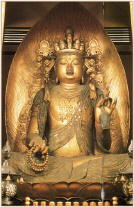
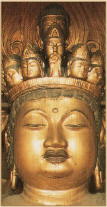
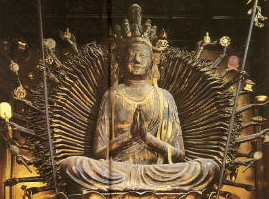
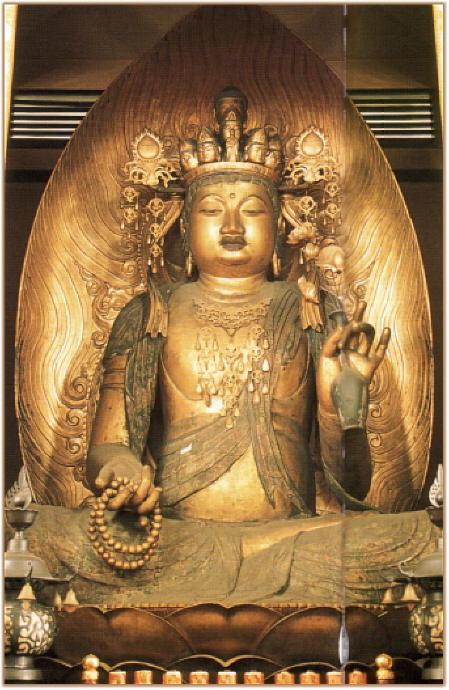
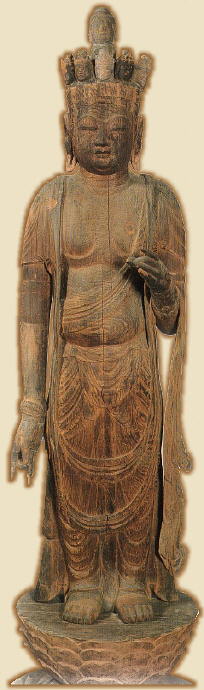
11 Headed Kannon, Fujiwara Era, Largest Wooded Sitting Statue in Japan, Rakuya-ji Temple
Juichimen Kannon
11-Headed Kannon (Wood)
10th to 12th Century
Rakuya-ji Temple

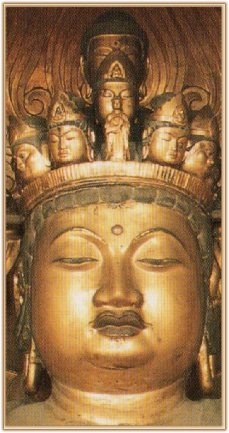
11 Headed Kannon, Fujiwara Era, Largest Wooded Sitting Statue in Japan, Rakuya-ji Temple
Juichimen Kannon
11-Headed Kannon (Wood)
10th to 12th Century
Rakuya-ji Temple

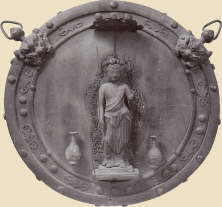
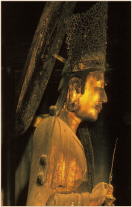
Juichimen Kannon (11-headed Kannon), 1326 AD, Hase Dera
Juichimen Kannon
11-headed Kannon
1326 AD, Hase Dera

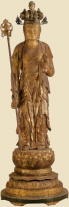
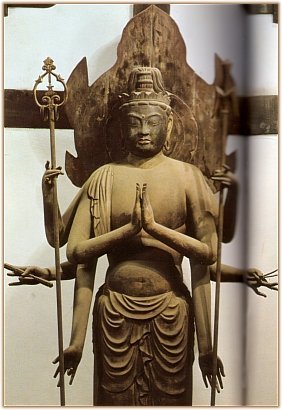
Fukukensaku Kannon, 8th to 9th Century, Kouryu-ji Temple
Fukukensaku Kannon
8th to 9th Century
Kouryu-ji Temple

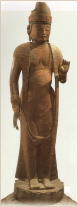
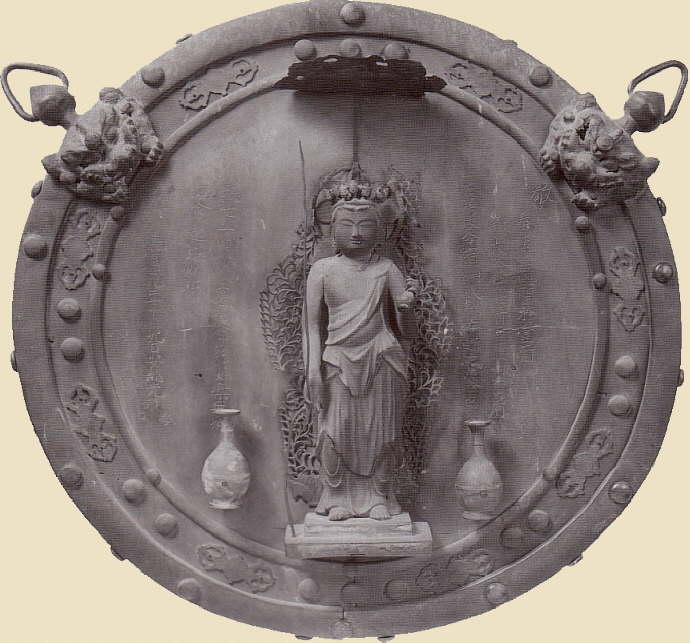
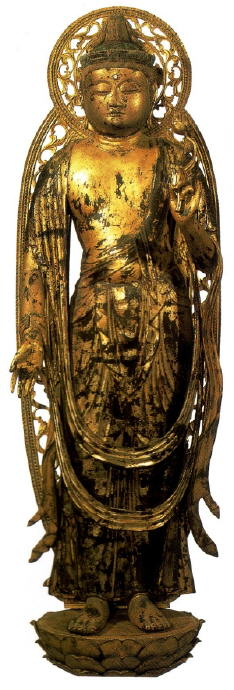
Sho Kannon, 10th to 11th Century, Tendai-ji Temple
Sho Kannon
10th to 11th Century
Tendai-ji Temple (Chuson-ji)

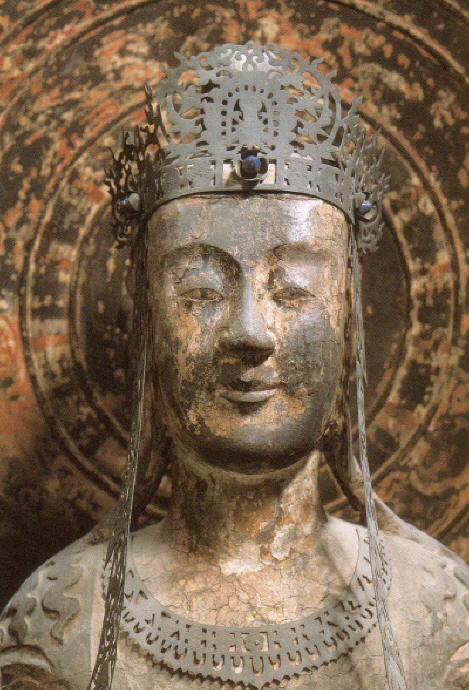
Yume-Chigai Kannon, Horyu-ji Temple, 8th Century
Yume-Chigai Kannon
8th Century
Horyu-ji Temple

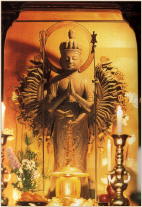
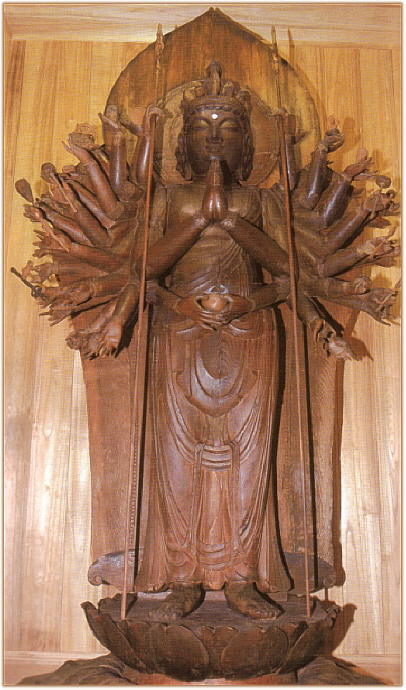
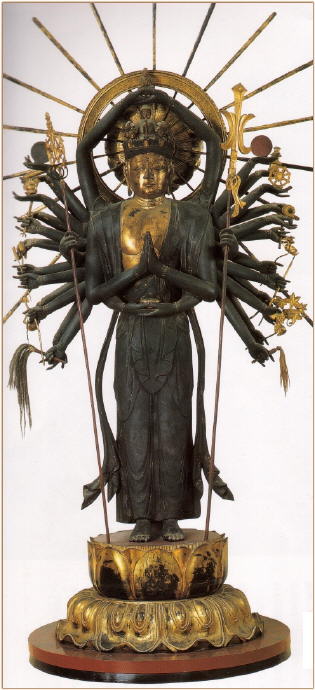
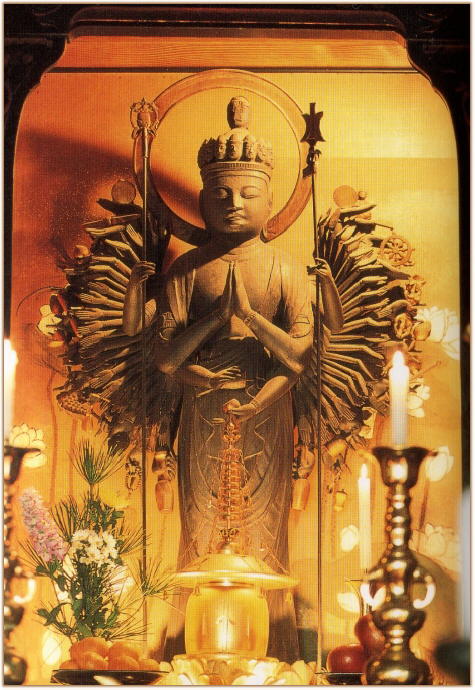
Senju Kannon, Fudarakusan-ji Temple, Heian Era
Senju Kannon
Heian Era
Fudarakusan-ji Temple

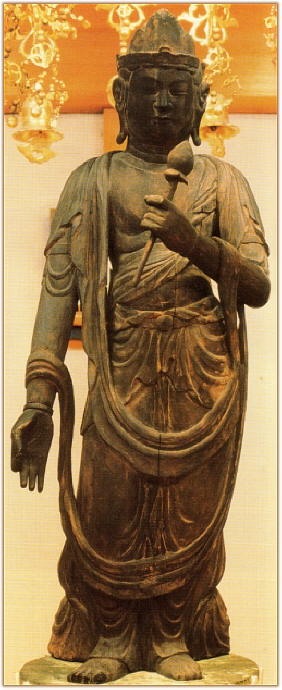
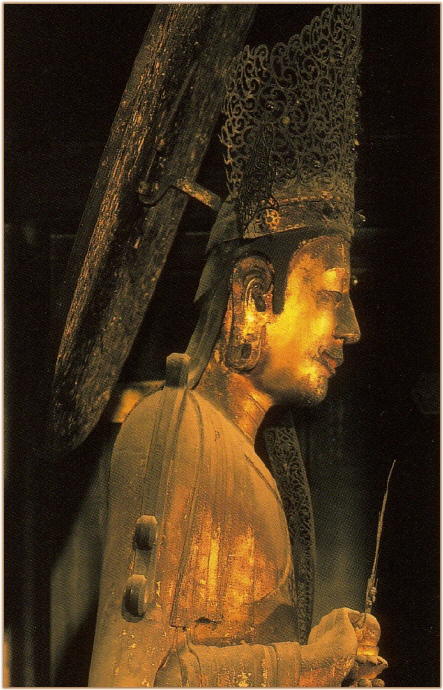
Sho Kannon, Ango-ji Temple, Heian Era
Sho Kannon
Heian Era
Ango-ji Temple

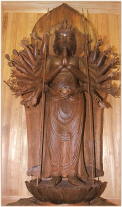
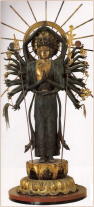
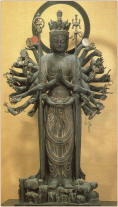
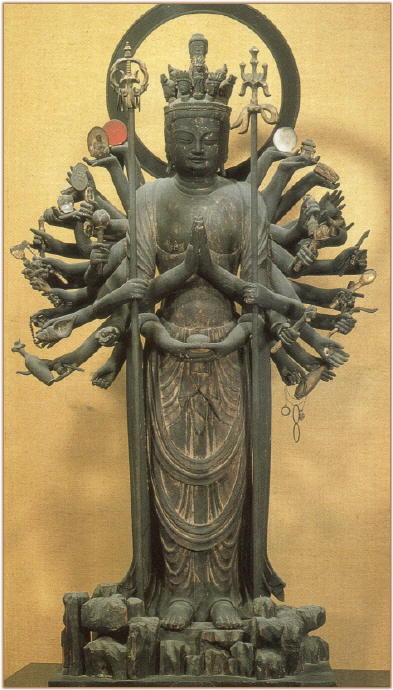
Senju Kannon, Fujii Dera, 752 AD, Emperor Shomu, Nat'l Treasure
Senju Kannon (1000 Arms Kannon)
Fujii Dera, 752 AD

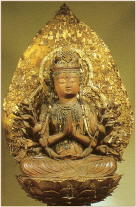
Senju Kannon, 12th Century, Chuson-ji Temple
Senju Kannon
12th Century
Chuson-ji Temple

Senju Kannon, 1154 AD, Bujyo-ji Temple
Senju Kannon
1154 AD
Bujyo-ji Temple

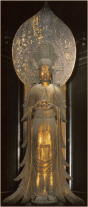
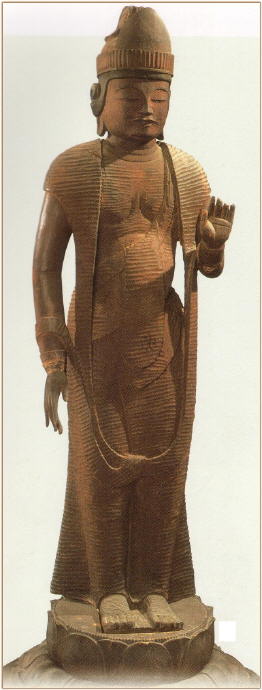
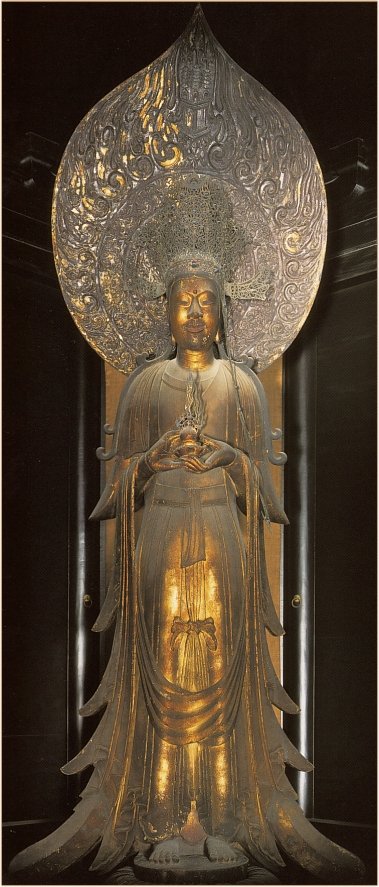
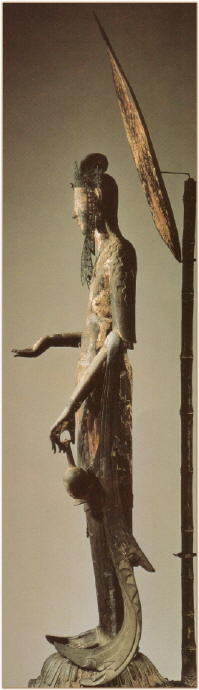
Kuse Kannon, 7th Century, Horyu-ji Temple
Kuse Kannon
7th Century
Horyu-ji Temple


Kuse Kannon
7th Century
Horyu-ji Temple

Senju Kannon, 10th Century, Byoodo-in Temple
Senju Kannon
10th Century
Byodo-in Temple

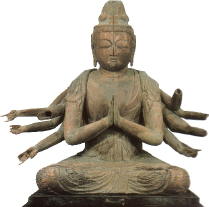
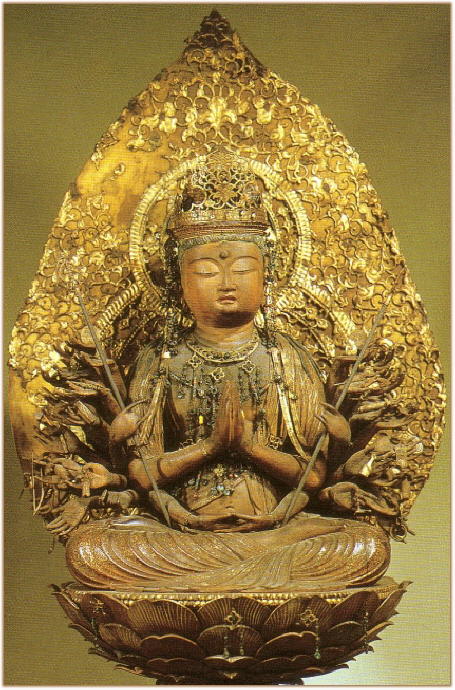
Senju Kannon, 1012 AD, Kouryu-ji Temple
Senju Kannon
1012 AD
Kouryu-ji Temple

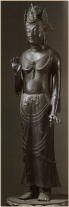
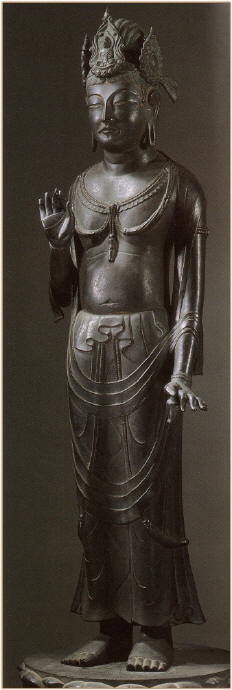
Kudari Kannon, 7th Century, Horyu-ji Temple
Kudari Kannon
7th Century
Horyu-ji Temple

Kudari Kannon, 7th Century, Horyu-ji Temple
Kudari Kannon
7th Century
Horyu-ji Temple

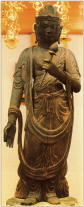
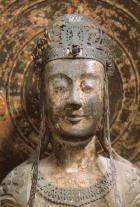
Kannon, 12th Century, Chuson-ji Temple
Kannon
12th Century
Chuson-ji Temple

Juichimen Kannon (11 Headed Kannon), Late Heian Era, Onsen-ji Temple
Juichimen Kannon (11 Headed)
Late Heian Era
Onsen-ji Temple

Juichimen Kannon (11-headed), Late 8th Century, Kaniman-ji Temple
Juichimen Kannon (11-headed)
Late 8th Century
Kaniman-ji Temple

Juichimen Kannon (11-headed), Late Heian Era, Onsen-ji Temple
Senju Kannon
Late Heian Era
Onsen-ji Temple

Juichimen Kannon (11-headed), Edo Era, Hase Dera
Juichimen Kannon (11-headed)
Edo Era
Hase Dera

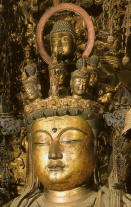
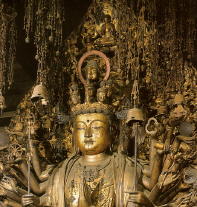
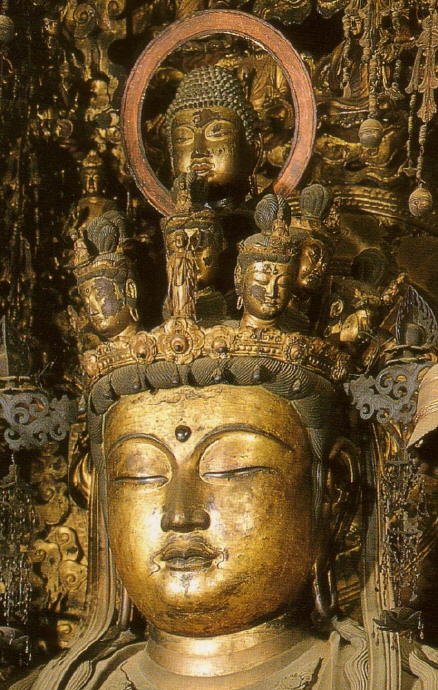
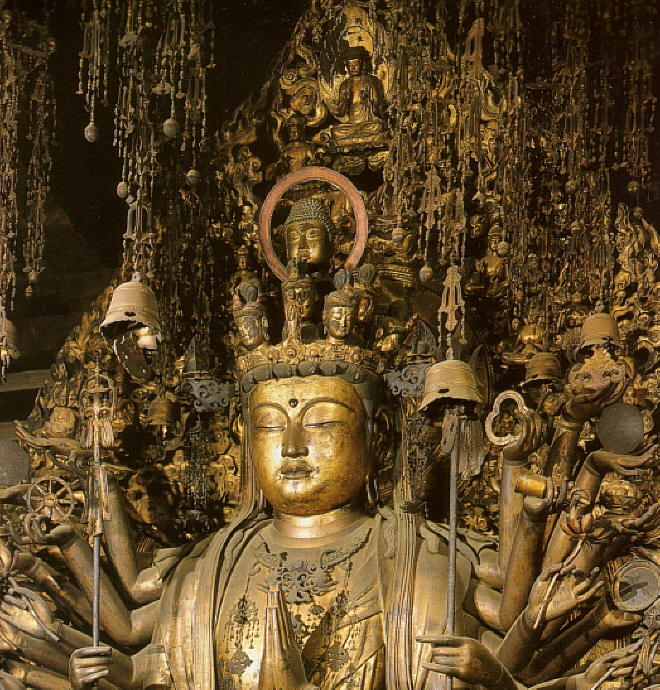
Senju Kannon, Closeup, 12th Century, Sanjusangendo
Senju Kannon (Closeup)
12th Century
Sanjusangendo

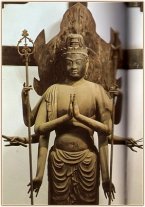
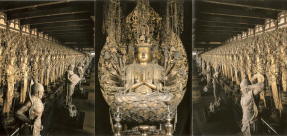
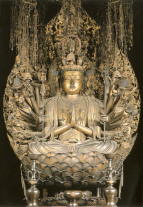
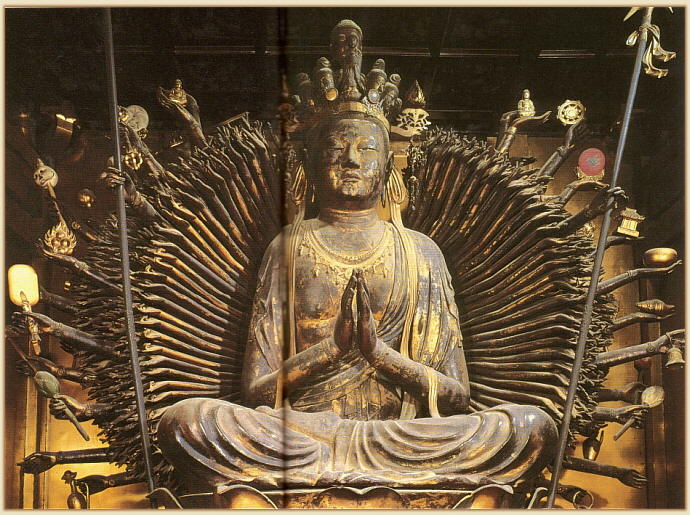
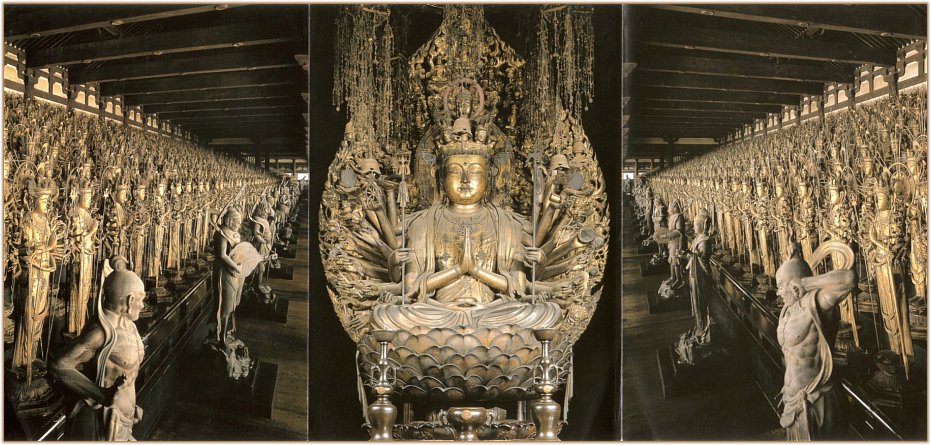
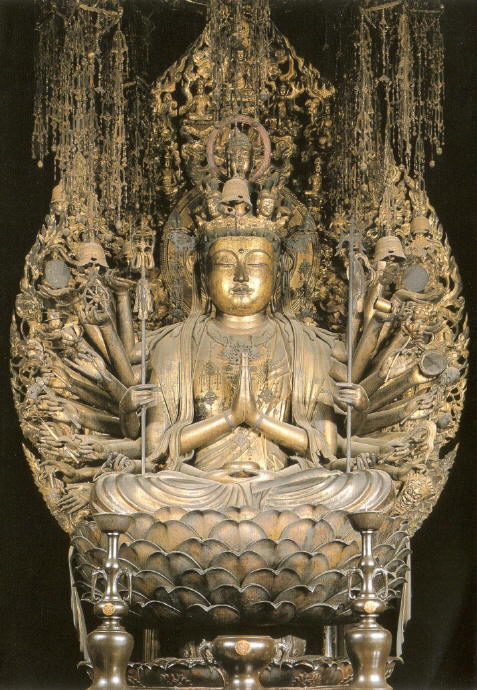
Senju Kannon (1000-armed), 12th Century, Sanjusangendo
Senju Kannon (Middle Photo)
12th Century, Sanjusangendo Brochure
Carved by Tankei (Unkei's son)

Senju Kannon, 12th Century, SanjusangendoSenju Kannon, 12th Century, Sanjusangendo
(L) Senju Kannon, 12th Century, Sanjusangendo Brochure

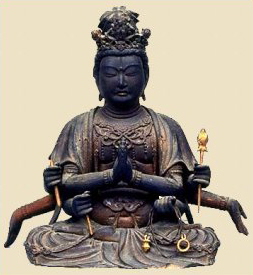
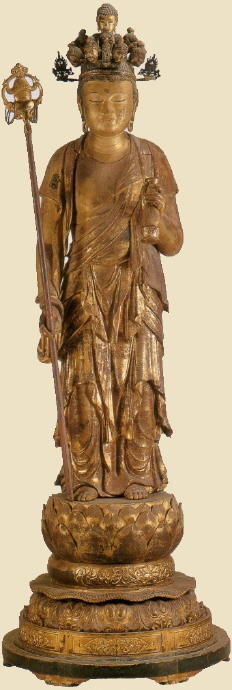
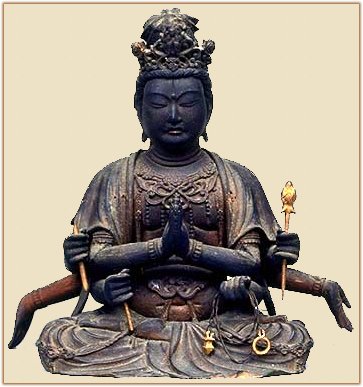
Fukukensaku Kannon, Kamakura Era, Wood, Photo Courtesy Kyoto National Museum
Fukukensaku Kannon - "Never Empty Lasso"
Lasso in hand to catch straying souls
and lead them to salvation; usually depicted with eight arms.
Sanskrit = Amoghapasa Avalokiteshvara
Kamakura Era, Wood

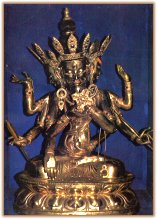
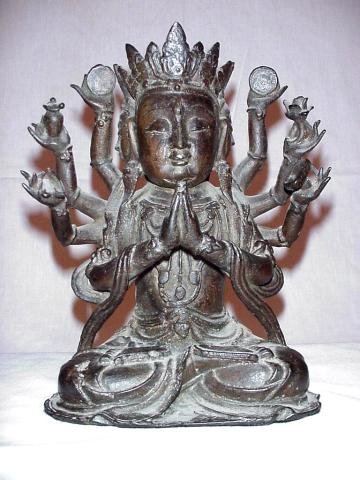
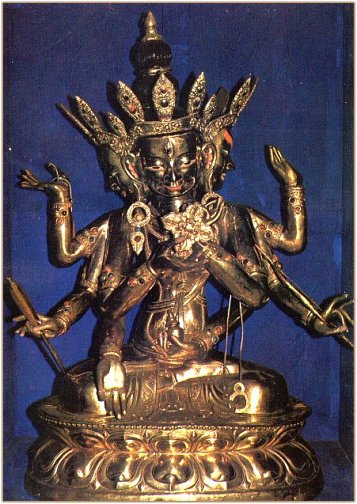
Mongolian Kannon Frontside
Quan Yin
Ming China (1368 - 1644)
Front of Statue
From Reader Scott Alexander
3-Faced Kannon

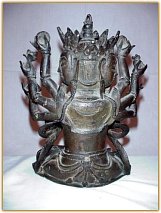
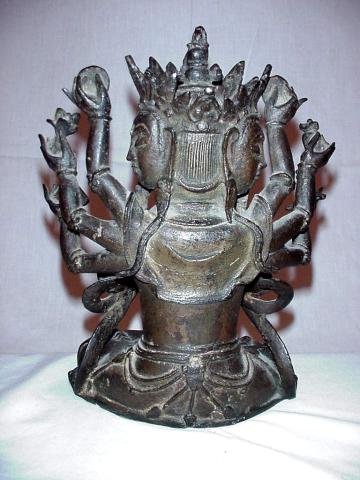
Mongolian Kannon Backside
Quan Yin
Ming China (1368 - 1644)
Back of Statue
From Reader Scott Alexander
3-faced Kannon

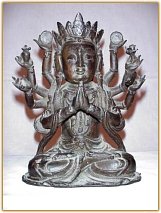
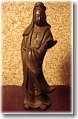
Kannon, Mongolia, 17th Century
Kannon
Mongolia, 17th Century
Submitted by site visitor

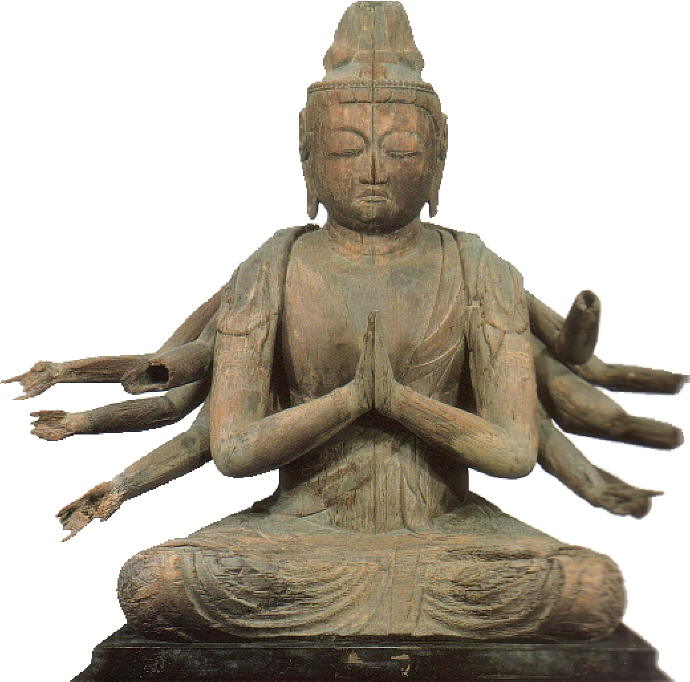
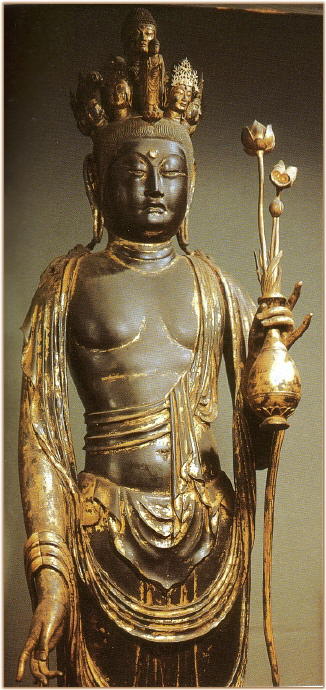
Juichimen Kannon, 6th to 7th Century, Horuyu-ji Temple
Juichimen Kannon
6th/7th Century, Horuyu-ji Temple
Submitted by site visitor

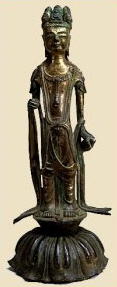
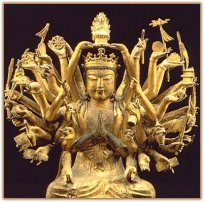
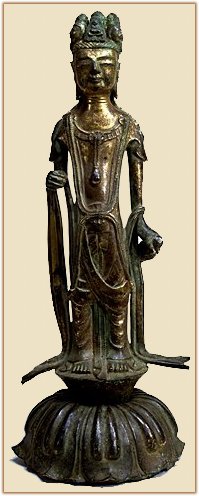
Senju Kannon, 3rd Century 3 Kingdoms, Korea Chonsukwanunposal
Senju Kannon
3rd Century Three Kingdoms Period
From Korea -- Chonsukwanunposal

This is a Side Page -- Kannon Bosatsu
Click here to return to Main Kannon Page

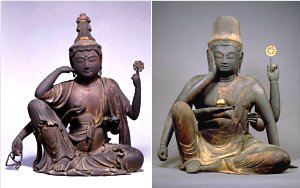
Nyoirin Kannon at the Nara National Musuem
Nyo-irin Kannon
Courtesy Nara National Museum
(L) Kamakura Period  (R) Heian Period, 10th century
http://www.narahaku.go.jp/meihin/  (Japanese language only)
 A wonderful site with wonderful images of Buddhist art


Below Text Courtesy of
www.buddhanet.net/e-learning/history/b_fbodi.htm

Among the Bodhisattvas, it is Avalokitesvara who has the largest number of forms and is perhaps the most venerated and most popular Buddhist deity. His sex, originally masculine, is sometimes considered feminine in China and Japan, although this discrimination is unsupported by any canonical text. And was often considered in China and Japan as the 'mother of the human race' and, in this respect, worshipped in the form of a woman.

Avalokitesvara is known from very early in the development of the Mahayana doctrines and, until Buddhism disappeared from India, enjoyed great favour there. His cult passed from India to South-East Asia and Java, where it met with great success, and also in Nepal, Tibet (where he arrived with Buddhism and where King Srong-btsan Sgam-po, 519-650, was considered to be his incarnation), and in China, from where he went on to Korea and Japan. All these countries imagined him in different forms according to their own temperaments and spirituality.
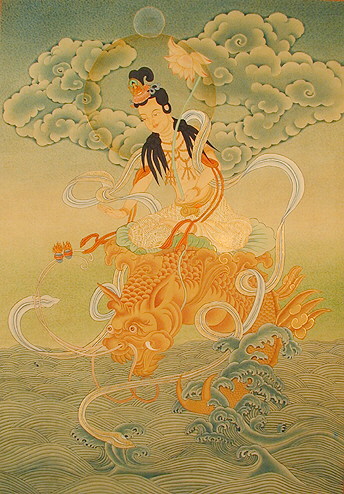
Kannon (Avalokiteshvara) riding the mythical Shishi lion
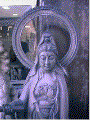
Kannon Bosatsu (Modern; unsure what she is riding)
Riding the mythical Shishi lion? Or is it a Serpent/Dragon/Naga?
Photo courtesy www.tibetshop.com -- online Buddhist art store
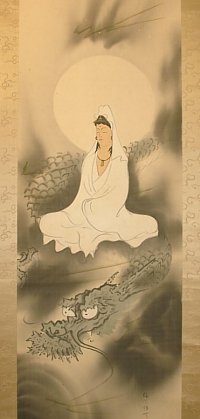
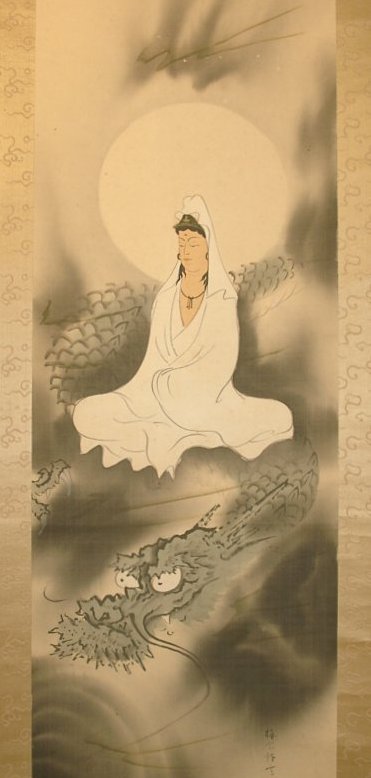
Scroll by Baiun, photo courtesy of yoursourceinjapan.com
KANNON RIDING DRAGON SCROLL
By Baiun Sakamoto (1875-?)
Baiun's real name was Hisakichi.
Born in Nara Prefecture, and residing in Osaka,
Baiun apprenticed with Chikugai Himejima.

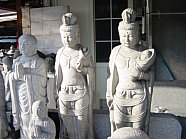
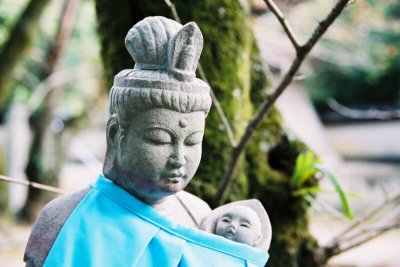
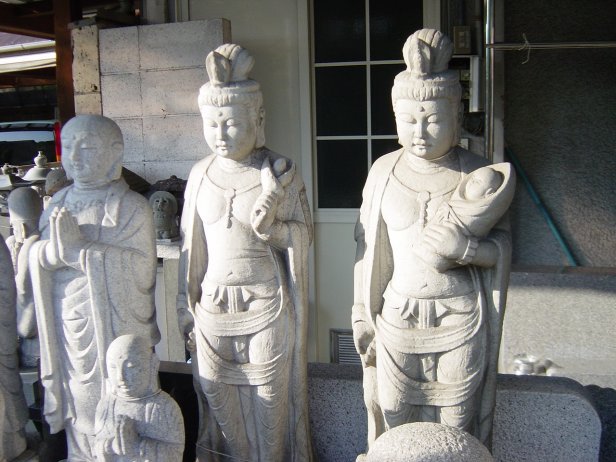
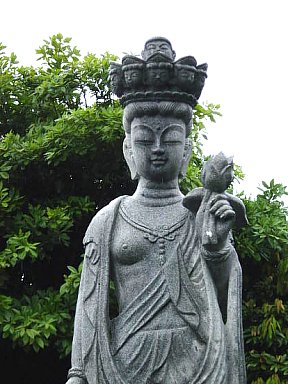
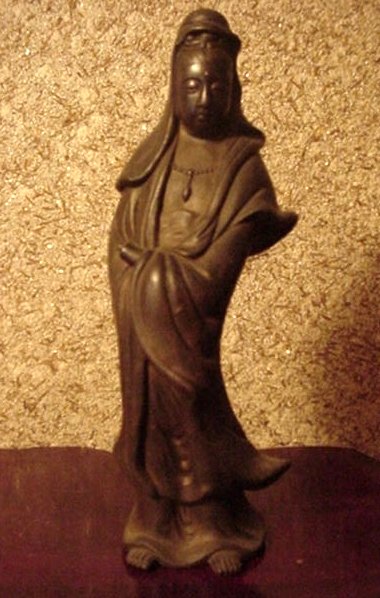
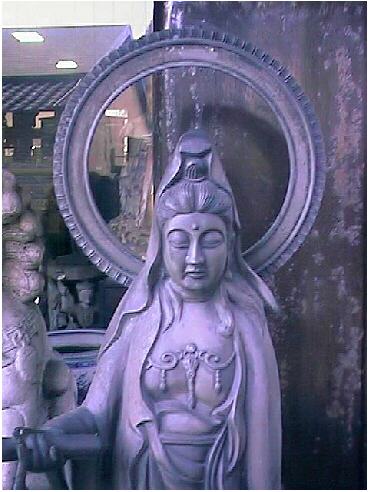
Modern stone statue of Kannon Bosatsu holding a baby
Modern Stone Statue
Koyasu (Child-Giving) Kannon (Juntei Kannon ?) holding babe
 Photo taken at Kamakura shop selling stone statues, 2003

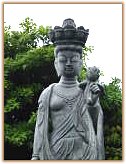
Juichimen Kannon (11-Headed Kannon) at Zenyo-in (Inatori City)Juichimen Kannon (11-Headed Kannon) at Zenyo-in (Inatori City)Juichimen Kannon (11-Headed Kannon) at Zenyo-in (Inatori City)
Juichimen Kannon (11-Headed Kannon) at Zenyo-in (Inatori City)
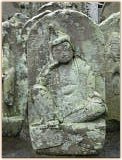
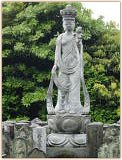
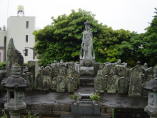
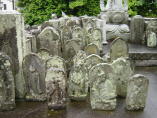
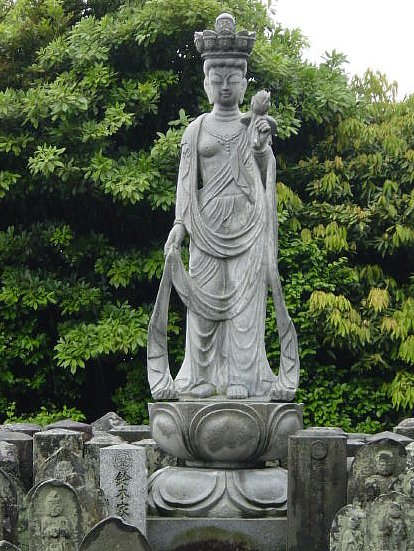
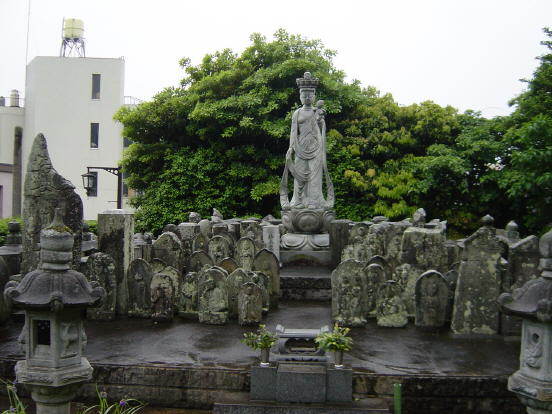
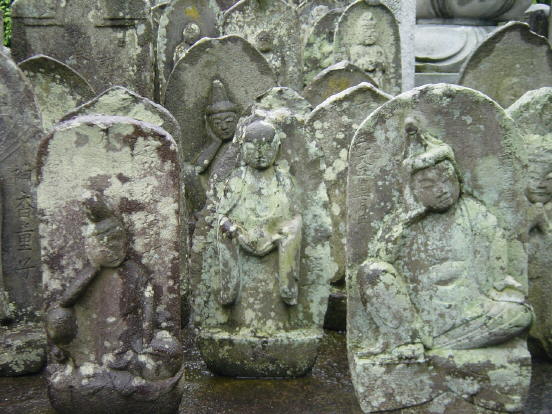
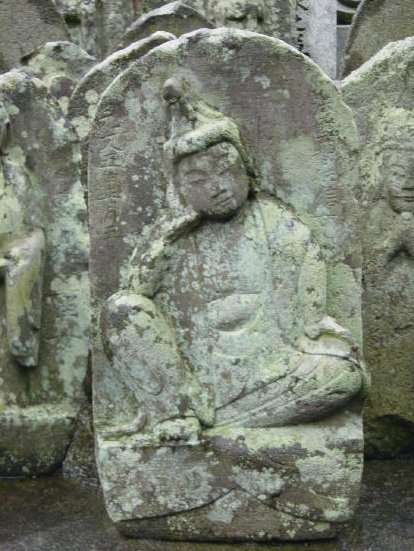
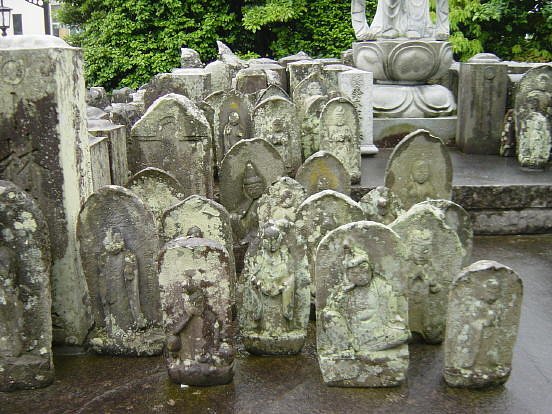
Stone carvings including Nyo-irin Kannon, at Zenyo-in in Inatori CityNyo-irin Kannon, at Zenyo-in in InatoriStone carvings including Nyo-irin Kannon, at Zenyo-in in Inatori City
Stone statues surrounding the 11-headed Kannon
Center photo shows the Nyo-irin Kannon
Statues found at Zenyo-in (Inatori City)
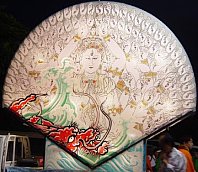
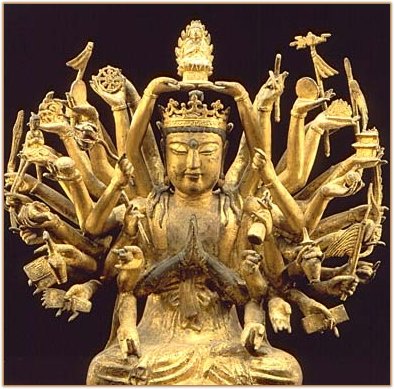
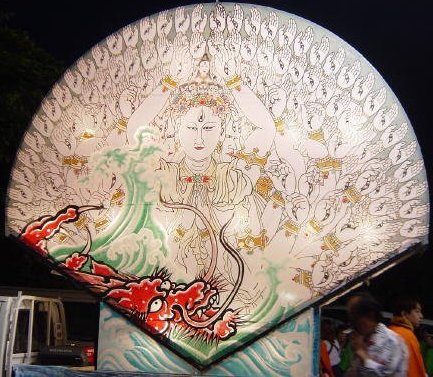
1000 arm Kannon - Senju Kannon
Festival artwork of the Senju Kannon (1000-arm Kannon)
 Inatori Fertility Festival held in June each year (Dontsuku Festival)
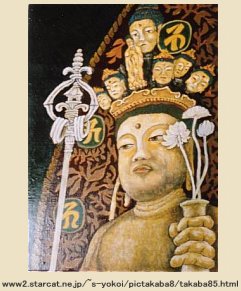
11-Headed Kannon - Drawing

Bizen Figurine of Kannon, Meiji Era, Owned by Robert YellinClick for larger photo


Juntei Kannon, Heian Period, Courtesy Tokyo National Museum
Juntei Kannon -- Painting
 Heian Period, Courtesy Tokyo National Museum

For Many More Wonderful Photos, Please Visit:
KANNON -- Shikoku, 88 Holy Sites, Kannon Photo Tour
Japanese Site. Wonderful photos of the Kannon statues found on this circuit. Photos courtesy of the Health Center Faculty of Medicine, Kagawa University. NOTE: Of the 88 temples in the Shikoku Pilgrimage, 29 are dedicated to Kannon.  In addition, sacred pilgrimage images of the Kannon can be found by visiting this site's Pilgrimage Guide.

Koyasu Kannon, Temple #71, Shikoku 88
KOYASU KANNON
第71番:弥谷寺
88 Temples of Shikoku, Temple #71
kms.ac.jp/~hsc/henro/FJK/kannon/kannon.htm
See above site for many more photos.


This is a Side Page -- Kannon Bosatsu
Click here to return to Main Kannon Page

spacer

bottom bar

Copyright 1995-2008. Mark Schumacher. Email Mark.
All stories and photos, unless specified otherwise, by Schumacher.
www.onmarkproductions.com     |     make a donation