|
|
|
|
 Seven Sites in Kamakura Seven Sites in Kamakura
Most people no longer walk the circuit in its entirety , but instead combine their feet with cars, buses, trains, or bicycles. Using any combination of the above, one can complete this circuit in four or five hours. To document their journey, some pilgrims purchase a rectangular stamping sheet at their first location, then present it to each successive temple or shrine for stamping. Although the sites are assigned numbers, participants can visit them in any order (the only prerequisite is that “all” are visited). For example, most pilgrims combine Hase Dera (#2) and Goryō Shrine (#6), both on the western side of town, and both within a short walking distance of the Big Buddha of Kamakura. This pilgrimage need not be completed in a fixed timeframe. Instead, participants can perform the circuit in multiple journeys spread out over any length of time.
- Myōgonzan Hongakuji Temple 妙厳本覚寺 -- Ebisu, the god of the ocean, fishing folk, sailors, commerce, and fair dealing. Japanese origin. Learn about the temple here. One hundred and fifty meters southeast of JR Kamakura Station. See note about special Ebisu festivals in Kamakura.
- Hase-dera Temple 長谷寺 -- Daikokuten, the god of agriculture, farming, wealth, and commerce. Also the god of five cereals. Origin India (Skt. = Mahakala). The Daikoku effigy here is a wood statue dated to 1412 AD. Learn about the temple here. Three hundred meters northwest of Hase Station on the Enoden Line.
- Hōkaiji (Hokaiji) Temple 宝戒寺 -- Bishamonten, the god of treasure, scourge of evil doers, defender of the Buddhist faith, and patron of warriors. Origin India (Skt. = Vaisravana). An-yo-in Temple 安養院 used to be on the list until 1997. Learn about Hōkaiji here or learn about An-yo-in here. Four hundred meters northeast of JR Kamakura Station.
- Tsurugaoka Hachimangū Shrine 鶴岡八幡宮 -- Benzaiten, the goddess of music, fine arts, beauty, eloquence, and literature. Origin India (Skt. = Sarasvati). The only female in the group of seven. Learn about the shrine here. Two hundred meters northeast of JR Kamakura Station.
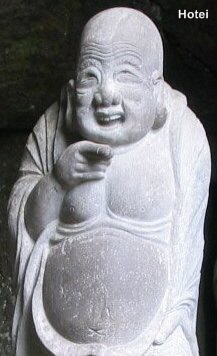
- Jōchiji (Jochiji) Temple 浄智寺 -- Hotei, the god of contentment, happiness, bartenders, and all classes of people. Origin China (Chn. = Putai, Budai). Thought to be an incarnation of Miroku Bosatsu), Hotei is widely known in the West as the Fat, Laughing Buddha. Learn about the temple here. Some 400 meters south of Kita-Kamakura Station
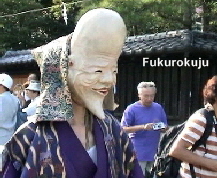
- Goryō (Goryo) Jinja Shrine 御霊神社 -- Fukurokuju, the god of wealth (fuku 福), happiness (roku 禄), and longevity (ju 寿). Origin Chinese Taoism. A personification of the southern polar star (Jp. = Nankyokusei 南極星). Learn about the shrine here. Three hundred meters west of Hase Station on the Enoden Line.
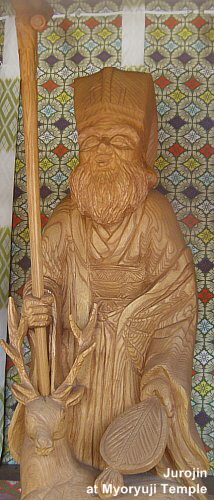
- Myōryūji (Myoryuji) Temple 妙隆寺 -- Jurōjin, the god of wisdom and longevity. Origin Chinese Taoism. A personification of the southern polar star (Jp. = Nankyokusei 南極星) and a Chinese Taoist sennin 仙人 (immortal) of China's Northern Song 北宋 period. Learn about the temple here. Three hundred meters northeast of JR Kamakura Station.
Note
Ebisu Festivals in Kamakura
When: Annually from January 1 to 3, and January 10.
Events: People come to pray for the prosperity of their business and a good economy in the coming year. Fuku-Musume (fortune maidens) in beautiful traditional costume sell lucky bamboo ornaments (Fuku-Zasa) during the "Ebisu-Ichi" market from January 1 to January 3 at the Hongaku-ji Temple, home to the deity Ebisu. January 10 is the day of the main "Ebisu-Taisai" festival, with the New Year "Fuku-Mochi" lucky-rice-cake-making ritual performed from noon following the "Hon-Ebisu" Buddhist prayer service held in the morning. For details, contact Hongaku-ji Temple (Tel: 0467-22-0490). For other events, please see Kanagawa Japan Tourist Guide.
Multi-site Pilgrimages
The multi-site format of the Seven Lucky Gods Pilgrimage is one of the most prevalent pilgrimage formats in Japan. Multi-site circuits involve a number of sacred places linked together numerically, with each location devoted to the same single deity or to a group of related deities. This is known as honzon junrei 本尊巡礼 — literally to wander around (jun) to worship (rei) the principle deity (honzon). In order to complete the pilgrimage, participants are obliged to visit every single site on the circuit. Each site is equally important and none serve as the center or definitional locus. Although the sites are assigned numbers, participants can visit them in any order (the only prerequisite is that “all” are visited). Multi-site pilgrimages need not be completed in a fixed timeframe. Instead, participants can perform the circuit in multiple journeys spread out over any length of time. In bygone times, pilgrims often wore special pilgrimage garments. Today most wear everyday clothes and carry a book (nōkyō-chō) that can be purchased at any site along the route. This book is then stamped (for a small fee) at each site visited. These stamps (shu-in) are often very artistic, but their main function is to serve as a testimony to the pilgrim’s completion of the journey.
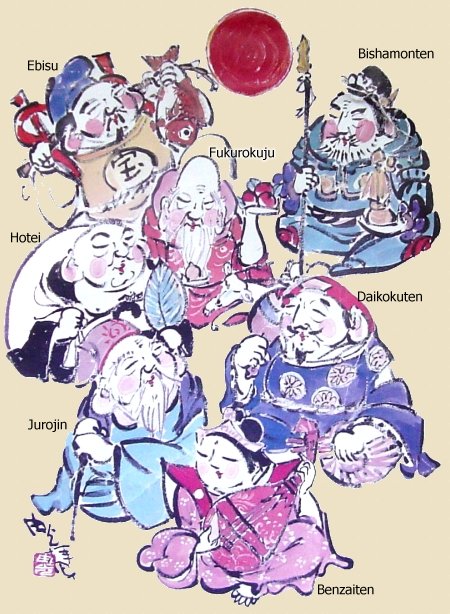
ABOVE. Modern-day poster (2008). Found at Myōryūji Temple 妙隆寺 in Kamakura. The temple also sells this image as a shikishi 色紙 (colored sheet of paper used for calligraphic poems or paintings). Myōryūji Temple is the 7th site on the Kamakura Pilgrimage to the 7 Lucky Gods. It honors Jurōjin. To document your pilgrimage, buy a rectangular stamping sheet, called a kinen-shikishi 記念色紙, made of very stiff cardboard. You buy this at your first destination (1,000 yen), then at each successive stop in the circuit of seven, hand it to the temple office for stamping.
OTHER PILGRIMAGES TO THE SEVEN LUCKY GODS
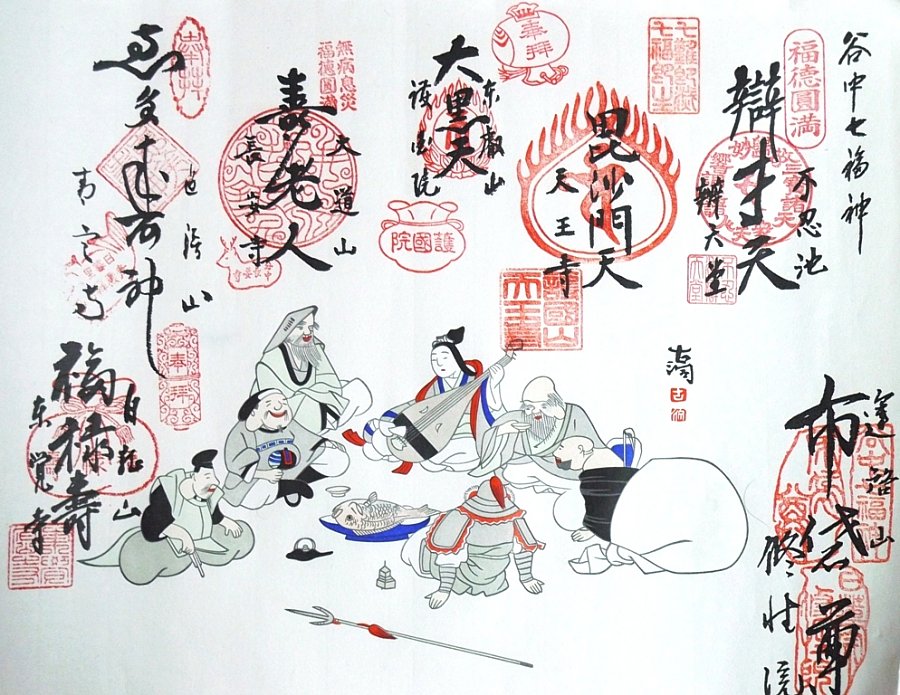
By the 19th century, most major cities had developed special pilgrimage circuits for the seven. These pilgrimages remain well trodden in contemporary times, especially during the first three days of January. But today, many people use cars, buses, and trains to move between the sites rather than walking. To document their journey, some pilgrims purchase a rectangular stamping sheet at their first location -- called a Kinen Shikishi 記念色紙 -- then present it to each successive temple or shrine for stamping. An example of a fully stamped kinen shikishi is shown below.
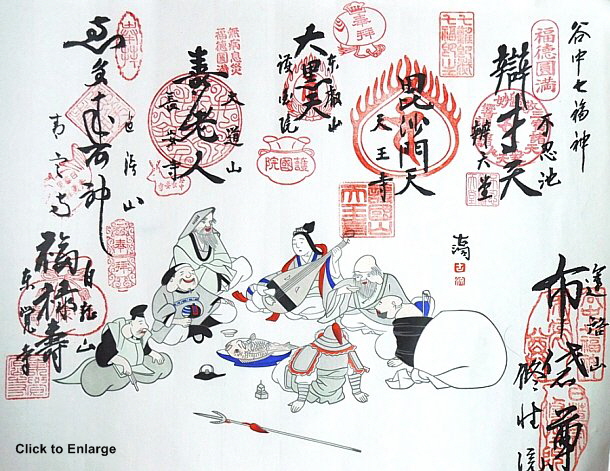
Stamping sheet from the Yanaka Shichifukujin Meguri 谷中七福神巡り or
“Pilgrimage to the Seven Lucky Gods in Tokyo's Yanaka district.” The Yanaka pilgrimage is
reportedly the oldest circuit devoted to the seven in Japan. Photo courtesy this J-site.
THIS IS A SIDE PAGE
Return to Seven Lucky Gods Main Menu
or Return to Japanese Pilgrimage Guide
|
|